
Many people believe aching feet are an inevitable part of getting older. The truth? While our feet change with age, persistent pain is not something you should simply accept.
Your feet work incredibly hard. By the time you reach 50, they’ve walked an estimated 75,000 miles. That’s the equivalent of travelling around the world three times!
As we age, natural changes occur. The cushioning under our heels becomes thinner, joints become stiffer, muscles lose density and strength, and our ligaments become less elastic and weaken. These changes can make us more susceptible to injury and discomfort.
However, pain is not a normal part of ageing.
If your feet hurt every day, there’s usually an underlying reason and in many cases, it can be treated.
Here are seven signs it’s time to seek professional advice.
1. Your pain is affecting your daily life
Have you stopped walking as far?
Are you voiding shopping trips?
Turning down days out with family or friends?
Choosing to sit instead of stand whenever the opportunity arises?
If your feet are changing the way you live your life, it’s time to investigate why. Many people gradually reduce their activity without realising how much their foot pain is limiting them.
The earlier a problem is identified, the easier it is often to manage.
2. The pain is there every morning
Do your first few steps out of bed make you wince and hobble?
Morning pain is commonly associated with conditions such as plantar fasciopathy or arthritis. Although it may ease as you move around, recurring morning pain might be your body’s way of telling you something isn’t right and ignoring it rarely makes it disappear.
3. You’ve started changing the way you walk
Sometimes the biggest problem isn’t where it hurts.
When we experience pain, we naturally change the way we walk to avoid it. Unfortunately, this can place extra stresses on other joints, leading to pain in other parts of the body such as the knees, hips or lower back.
Treating the original cause early can help prevent a chain reaction of problems elsewhere in the body.
4. You’re relying on painkillers to get through the day
Pain relief has its place, but it doesn’t solve the underlying problem.
If you’re regularly reaching for painkillers just to stay active, it’s worth finding out what’s causing your symptoms rather than simply masking them.
5. Your shoes don’t feel comfortable anymore
Many people assume they suddenly need wider shoes or softer trainers.
Sometimes that’s true, but changes in footwear comfort can also indicate problems such as bunions, arthritis, tendon disorders or changes in foot shape and function.
A professional assessment can identify what’s really happening and help point you in the right direction for getting better fitting shoes.
6. You’ve tried everything… but nothing lasts
You’ve bought new shoes.
You’ve tried insoles.
You’ve watched YouTube exercises.
You’ve rested.
You’ve stretched.
Maybe things improved for a while but the pain always seams comes back.
This is often because the treatment wasn’t matched to the correct diagnosis.
Foot pain isn’t one condition. It’s a symptom with many possible causes, and successful treatment depends on understanding exactly what’s driving your pain.
7. You’ve accepted it as “just old age”
This is perhaps the biggest warning sign of all.
We hear it every week – “I thought I just had to live with it.”
The reality is that many painful foot conditions respond very well to the right treatment.
Whether the cause is arthritis, tendon pain, plantar fasciopathy, biomechanical overload or another condition, modern podiatry offers many effective treatment options that can reduce pain and help you stay active.
So how can York Podiatry can help?
We believe that every patient deserves an accurate diagnosis before treatment begins.
Our comprehensive assessments combine years of clinical expertise with advanced technology to understand why your pain has developed and not just where it hurts.
Depending on your needs, your assessment may include:
- Comprehensive biomechanical assessment
- Pressure plate analysis to measure the forces acting through your feet during standing and walking
- Detailed gait analysis
- Custom 3D-printed orthoses where appropriate
- Rehabilitation programmes tailored to your lifestyle and goals
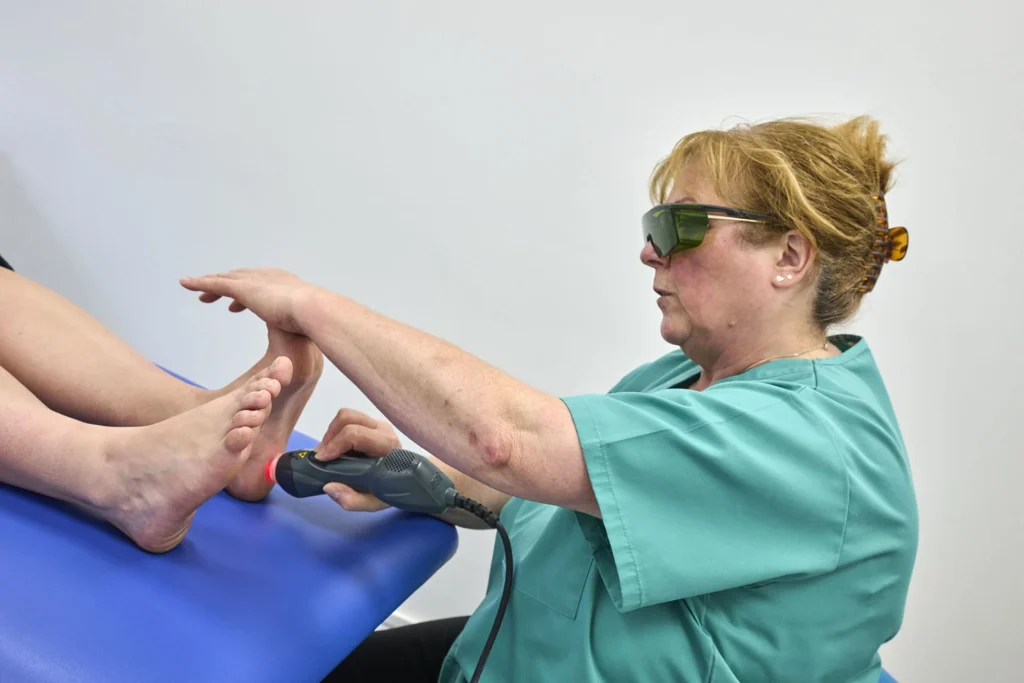
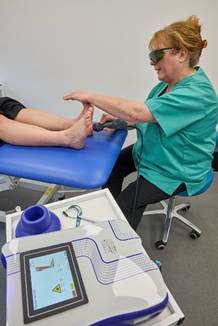
- Class IV MLS Laser Therapy to support tissue healing and pain relief
- Swiss DolorClast® Shockwave Therapy for suitable chronic tendon and heel conditions
Every treatment plan is personalised because no two patients, indeed no two feet are exactly the same.
Don’t let foot pain become your normal
Growing older doesn’t mean giving up the activities you enjoy.
Whether that’s walking the dog, playing golf, travelling, gardening or simply keeping up with the grandchildren, healthy feet play a vital role in maintaining your independence and quality of life.
If you’ve been putting up with foot pain because you thought it was “just your age”, it may be time to think again.
A professional assessment could be the first step towards getting back to doing the things you love comfortably.