Understanding the real cause of heel pain and why treating the cause—not just the symptoms, is the key to lasting recovery.
Heel pain is one of the most common reasons people visit a podiatrist, yet it’s also one of the most misunderstood. Many people try stretching exercises they have found online, buy new trainers, purchase insoles from the internet or simply hope the pain will disappear with time.
Sometimes these measures provide temporary relief.
But all too often, the pain returns.
If you’ve been struggling with heel pain for weeks or even months, it’s worth asking yourself one important question:
Have you actually been given a diagnosis?
Heel pain isn’t a diagnosis
“Heel pain” simply describes where you feel discomfort—it doesn’t explain why it is happening.
There are several conditions that can all cause pain in the heel, including:
- Plantar fasciopathy (often incorrectly called plantar fasciitis)
- Heel fat pad syndrome
- Achilles tendon disorders
- Stress fractures
- Nerve entrapment
- Inflammatory arthritis
- Referred pain from the lower back
- Biomechanical overload
Although these conditions may feel similar, they require very different treatments. What works for one person could make another person’s condition worse.
This is why a thorough assessment is so important.
Looking beyond where it hurts
At York Podiatry, we don’t believe in guessing.
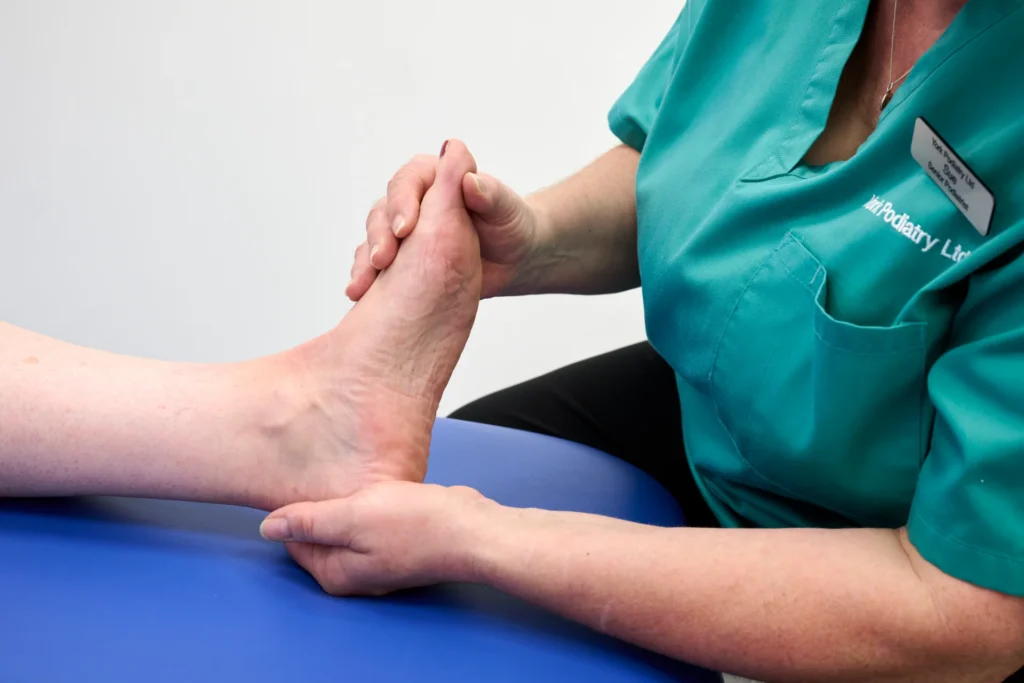
Our assessment is designed to understand why your heel pain has developed in the first place.
We look at:
- How you walk and move
- Your foot posture and biomechanics
- Muscle strength and flexibility
- Footwear
- Activity levels
- Medical history
- Previous injuries
- Lifestyle factors that may be contributing to your symptoms
Only once we’ve identified the underlying cause can we create a treatment plan that’s tailored specifically to you.
Technology that helps us find the cause
One of the advantages of modern podiatry is that we can combine clinical expertise with advanced technology to gain a much clearer understanding of what’s happening inside your feet.
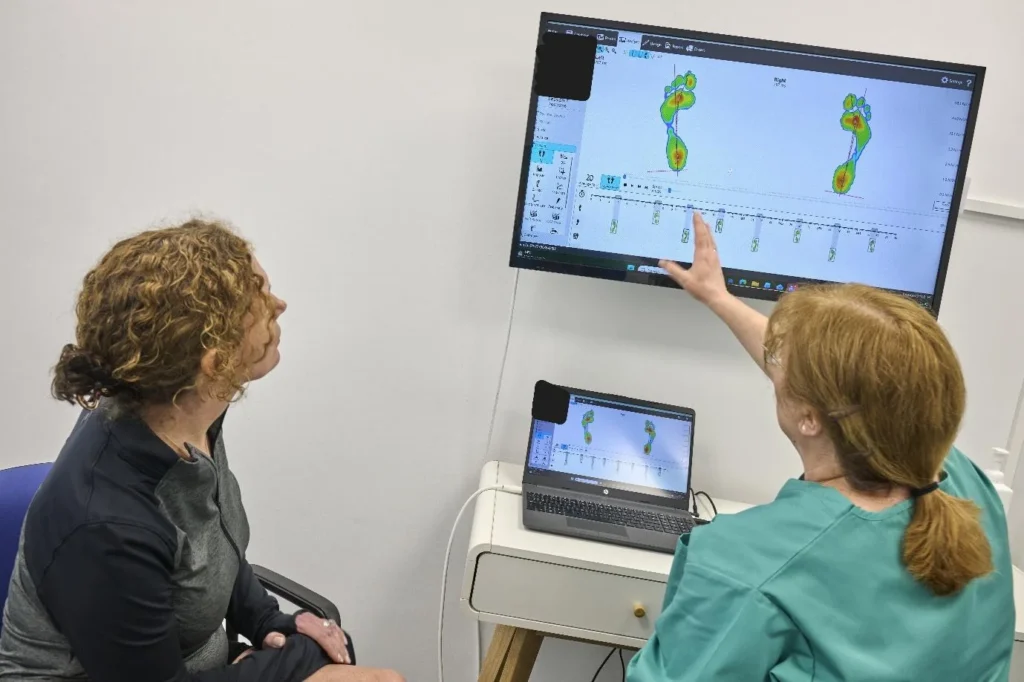
At York Podiatry, we use pressure plate technology to analyse the forces passing through your feet as you stand and walk. This provides valuable information about pressure distribution, balance and movement patterns that simply can’t be seen with the naked eye.
If we identify abnormal loading, we can prescribe custom 3D-printed orthoses, designed specifically for your feet. These devices are lightweight, accurate and personalised to improve foot function, reduce excessive pressure and support long-term recovery.
For suitable conditions, we may also recommend advanced therapies such as:
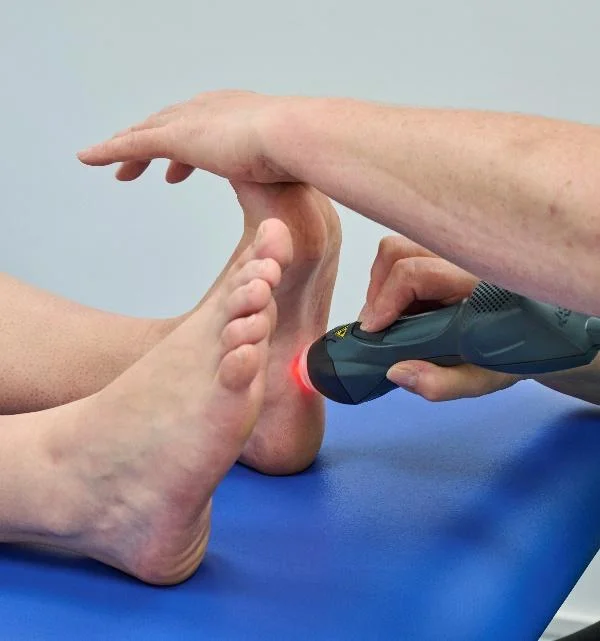
MLS® Class 4 Laser Therapy
MLS® laser therapy uses specific wavelengths of light to stimulate the body’s natural healing processes. It can help reduce pain, improve circulation and encourage tissue repair, making it an effective treatment for a range of tendon, ligament and soft tissue injuries.
Swiss DolorClast® Shockwave Therapy
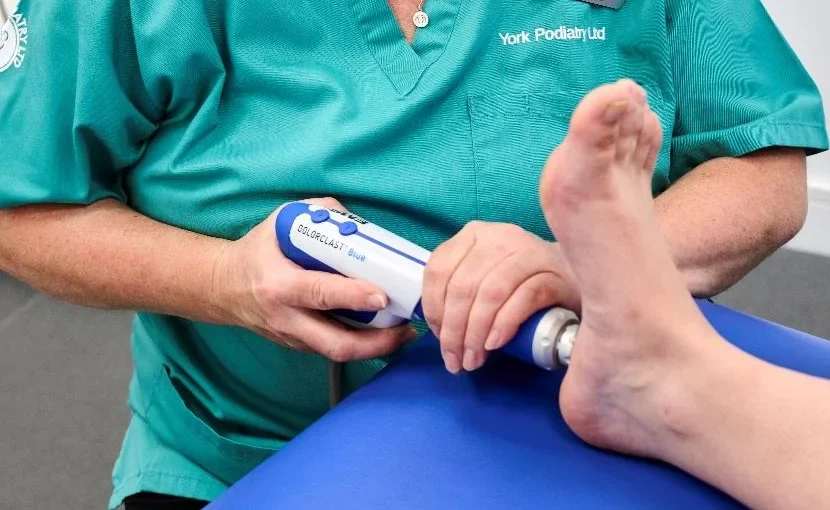
When appropriate, we also offer Swiss DolorClast® Radial Shockwave Therapy, widely recognised as the gold standard in shockwave technology.
Shockwave therapy is supported by a growing body of clinical evidence and is commonly used for long-standing heel pain and tendon problems that have not responded to other treatments. It works by stimulating the body’s natural healing response, helping damaged tissues repair more effectively.
Not everyone requires shockwave therapy, but for the right patient it can be an excellent option.
There is no one-size-fits-all treatment
One of the biggest misconceptions about heel pain is that everyone needs the same treatment.
In reality, successful treatment depends on understanding the underlying diagnosis.
Some patients benefit from rehabilitation exercises, others require changes to footwear, some need custom orthoses, whilst others respond well to shockwave therapy or laser therapy.
But most often, the best outcomes come from combining several treatments into a personalised rehabilitation plan.
Don’t ignore persistent heel pain
Many people put up with heel pain for months, adapting the way they walk and reducing the activities they enjoy.
The longer pain continues, the more it can affect your movement, fitness and overall quality of life.
The good news is that heel pain is often very treatable—provided the correct diagnosis is made early.
At York Podiatry, our aim is not simply to reduce your pain today but to understand why it developed, treat the underlying cause and help prevent it from returning.
If heel pain is stopping you from living life to the full, we’d be delighted to help.